Upcoming Seminar
May 13, 2026
9:00am New York / 6:00am Berkeley / 3:00pm Frankfurt / 6:30pm New Delhi / 9:00pm Beijing / 10:00pm Tokyo
|
|
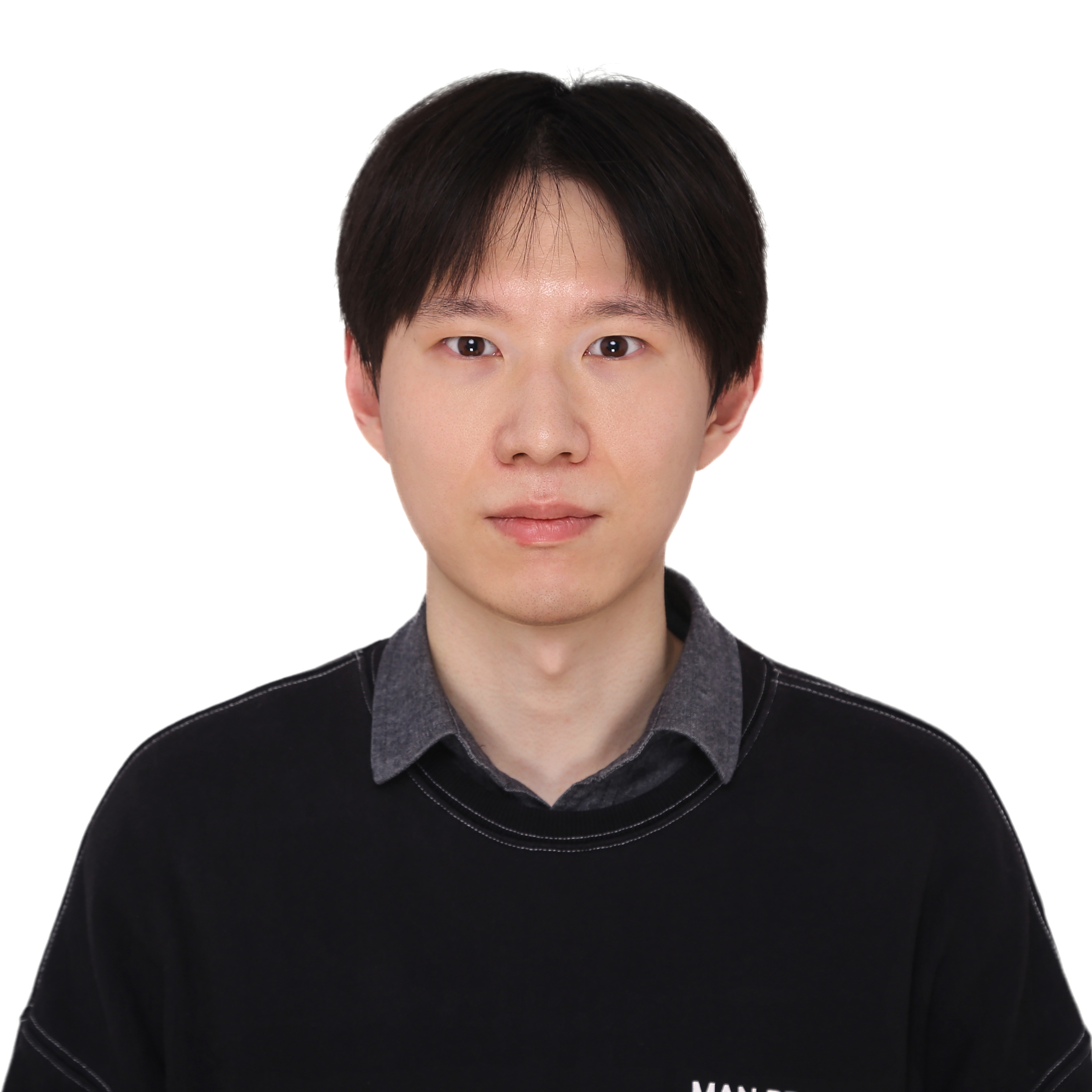
Speaker: Dr. Wei-Ping Huang (Eotvos University)Title: In-medium Bottomonium Properties from Lattice NRQCD Calculations with Extended Meson OperatorsAbstract:Quarkonium production can be used to probe the matter formed in ultrarelativistic heavy-ion collisions. However, for theoretical understanding of the experimental results on quarkonium production in heavy-ion collisions, it is necessary to know if and which quarkonium states exist above the crossover temperature, Tc, and what are the in-medium masses and widths of different quarkonium states. In this talk we will focus on the lattice QCD study of in-medium bottomonium properties [1]. In-medium bottomonium properties are encoded in the spectral functions, which are related to the Euclidean time correlators calculable on the lattice. We will present lattice QCD studies of 1S, 2S, 3S, 1P, 2P and 3P bottomonium correlators for T133−250 MeV [1], where the 3P state is explored for the first time. These calculations are performed with non-relativistic QCD (NRQCD) approach for the bottom quark and on (2+1)-flavor gauge backgrounds using highly improved staggered quark (HISQ) action near physical point. In our study we use correlators of extended bottomonium operators [2, 3] to gain optimized overlaps with specific states and to be more sensitive to thermal effects. Compared to the previous studies that are based on a single lattice spacing per temperature value and temporal extent N=12, we use two lattice spacings and lattices with the temporal extent N=16−30.
We find that all bottomonia states below the open bottom threshold exist above Tc, including 3P state. We will show the temperature dependence of the thermal widths and in-medium masses extracted from the bottomonium correlators with physically-motivated ansatzes for the spectral function. We find that, within estimated errors, the bottomonium masses do not change compared to their vacuum values for all temperatures under our consideration, while non-zero widths for different bottomonium states can be observed. These observations suggest excited bottomonium states still exist above Tc and screening is not the likely source of bottomonium dissociation.
|
Scheduled Seminars
- May 27, 2026, Dr. Peter Risse (SMU)
- Title: nCTEQ25 nuclear PDFs
Past Seminars
- April 29, 2026, Prof. Salvatore Plumari (University of Catania)
- April 15, 2026, Dr. Matthew Durham (Los Alamos National Laboratory)
- Title: Heavy mesons, baryons, and tetraquarks in the QCD medium - slides, recording
- April 1, 2026, Prof. Jinfeng Liao (Indiana University)
- March 18, 2026, Prof. Miguel Escobedo (Univ. of Barcelona)
- March 4, 2026, Dr. Ramona Vogt (LLNL / UC Davis)
- February 4, 2026, Dr. Sipaz Sharma (Technical University of Munich)
- January 21, 2026, Prof. Francesco Prino (INFN Torino)
- January 7, 2026, Prof. Jean-Paul Blaizot (IPhT, CAE, Saclay)
- December 10, 2025, Prof. Yen-Jie Lee (MIT)
- November 12, 2025, Dr. Rongrong Ma (BNL)
- October 29, 2025, Dr. Jorge DaSilva (BNL)
- October 8, 2025, Prof. Ralf Rapp (Texas A&M Univ.)
Seminar Archive